Free Builder Invoice Template UK (Download)
Download a free builder invoice template for the UK. See what to include, how to itemise labour and materials, and how to get paid faster.
Free Builder Invoice Template UK (Download)
A clear invoice helps builders get paid on time, avoid misunderstandings and keep accurate business records. Whether you are a self-employed builder, renovation contractor or small construction business, the template below gives you a practical starting point for billing customers in the UK.
Free Builder Invoice Template
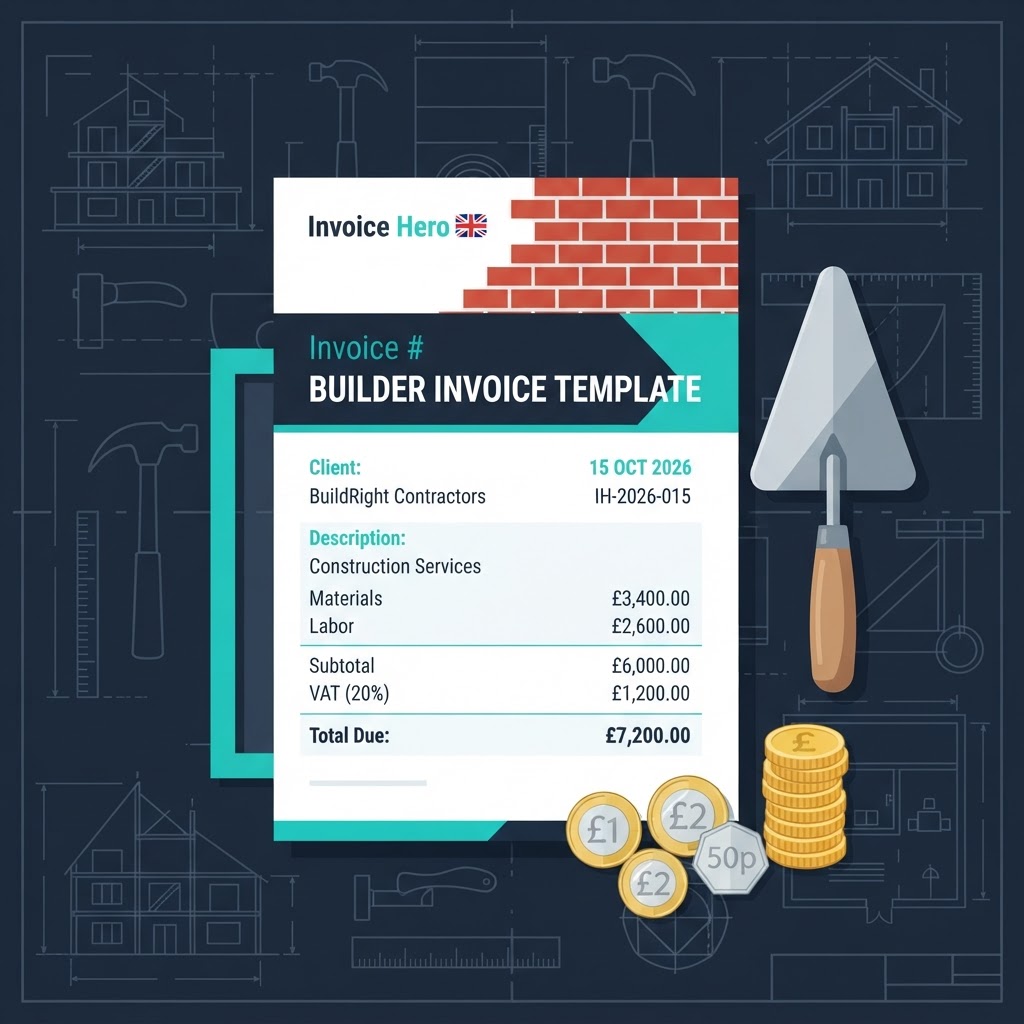
Copy the template into Word, Google Docs or a spreadsheet, replace the bracketed details and adjust the figures for your job.
[Your business name] [Your trading address] [Telephone] | [Email] UTR: [Your UTR number] VAT number: [If VAT registered]
INVOICE
Invoice number: B-0042 Invoice date: [DD/MM/YYYY] Payment due: [DD/MM/YYYY]
Bill to: [Customer name] [Customer address] [Customer email or telephone]
Project address: [Address where the building work was completed]
Description Qty Rate Amount Site preparation and labour 3 days £240.00 £720.00 Brickwork repairs 2 days £240.00 £480.00 Cement, bricks and mortar 1 £185.00 £185.00 Waste collection 1 £95.00 £95.00
Subtotal £1,480.00 VAT at 20%: [if applicable] £296.00 TOTAL DUE £1,776.00
Payment terms: 14 days Please pay by bank transfer to: [Account name] [Sort code] [Account number]
Please quote invoice number B-0042 with your payment.
Notes: [Add any warranty, snagging or project notes here.]
If you are not VAT registered, do not add VAT to your invoice. Remove the VAT line and show the correct amount due.
What to Include on a Builder's Invoice
A professional building invoice should include:
- The word Invoice clearly displayed
- A unique invoice number that follows your numbering system
- Your business name, address and contact details
- Your customer's name and address
- The project or job address, if different from the customer's address
- The invoice date and payment due date
- A clear description of the work completed
- Separate amounts for labour, materials, plant hire and waste removal where appropriate
- The quantity, rate and total for each line
- Your VAT number and VAT breakdown if you are VAT registered
- Payment instructions and accepted payment methods
- Any relevant guarantee, retention or project notes
If you are a sole trader working for a contractor under the Construction Industry Scheme, keep your UTR available and make sure your invoices and CIS deduction statements agree. A UTR is not required on every invoice, but contractors may need it for CIS administration.
Why Labour and Materials Should Be Itemised
Avoid a vague description such as "building work — £1,500". A customer should be able to see what the charge covers. Separating labour from materials makes the invoice easier to check and helps contractors understand which amounts relate to CIS deductions.
Useful line items might include:
- Preparation and demolition
- Bricklaying, plastering or carpentry labour
- Materials purchased for the project
- Tool, plant or equipment hire
- Skip hire and waste disposal
- Travel or delivery charges, where agreed
- Additional work outside the original quotation
Keep receipts for materials and record which project they relate to. If you add a handling or administration charge, explain it clearly and make sure it was agreed with the customer.
Deposits, Stage Payments and Retention
Larger building projects are often invoiced in stages instead of waiting until everything is finished. Your invoice should state exactly which stage it covers, such as "roof structure completed" or "first-fix plumbing complete".
For a deposit or stage payment invoice, include:
- The project name and address
- The agreed contract or quotation reference
- The stage of work completed
- The amount already paid, if relevant
- The amount requested now
- The remaining contract balance
- The next expected payment date
If the customer or main contractor is holding retention, show the retention percentage and amount separately rather than hiding it in the total. This reduces disputes later.
Payment Terms for Builders
State payment terms before work begins and repeat them on every invoice. Common terms include seven, fourteen or thirty days. For larger work, agree deposits, stage payments and a process for approving variations in writing.
If work changes from the original quote, describe the extra work on a separate line and refer to the customer's approval. Written approval by email or message can help if the final invoice is questioned.
Send the invoice promptly after completing the agreed stage. The sooner it reaches the customer, the sooner the payment clock starts.
Make Builder Invoicing Easier with Invoice Hero
A document template is useful for a one-off invoice, but manual invoicing can become difficult when you have several projects running at once. Invoice Hero helps you:
- Create professional invoices quickly
- Save repeat customer and project details
- Keep invoice numbers in sequence
- List labour, materials and additional charges clearly
- Track which invoices are paid, due or overdue
- Keep your income records organised for Self Assessment
Try Invoice Hero free at invoicehero.co.uk/register and send your next builder invoice with less admin.
FAQ
What should a builder include on an invoice? Include your business details, the customer's details, project address, invoice number, dates, itemised labour and materials, VAT if applicable, total due, payment terms and bank details.
Can I use this builder invoice template for a sole trader business? Yes. Add your sole trader business and contact details, keep invoice numbers unique and include your UTR when a contractor needs it for CIS purposes.
Should builders put materials and labour on separate invoices? Not usually. They can appear on the same invoice, but separate line items make the charges clearer and may help with CIS administration.
Do builders need to charge VAT? Only if they are VAT registered, unless a specific rule applies to the transaction. Do not add VAT if you are not registered. Check current HMRC guidance for your circumstances.
How long should builder invoices be kept? Keep invoices and supporting records for the period required by HMRC for your tax records. Store copies of invoices, receipts, approvals and CIS statements together so you can support your figures if asked.
How can I chase a late builder invoice? Check the invoice was sent to the right person, then send a polite reminder quoting the invoice number, amount and due date. Keep a record of reminders and any promised payment date.
This article provides general information for UK builders and contractors. VAT, CIS, retention and tax rules can depend on the project and your circumstances. Check current HMRC guidance or speak to a qualified accountant.