How to Chase Unpaid Invoices (Without Being Awkward)
Learn how to chase unpaid invoices politely and professionally. A practical UK guide for tradespeople, contractors and sole traders dealing with late payments.
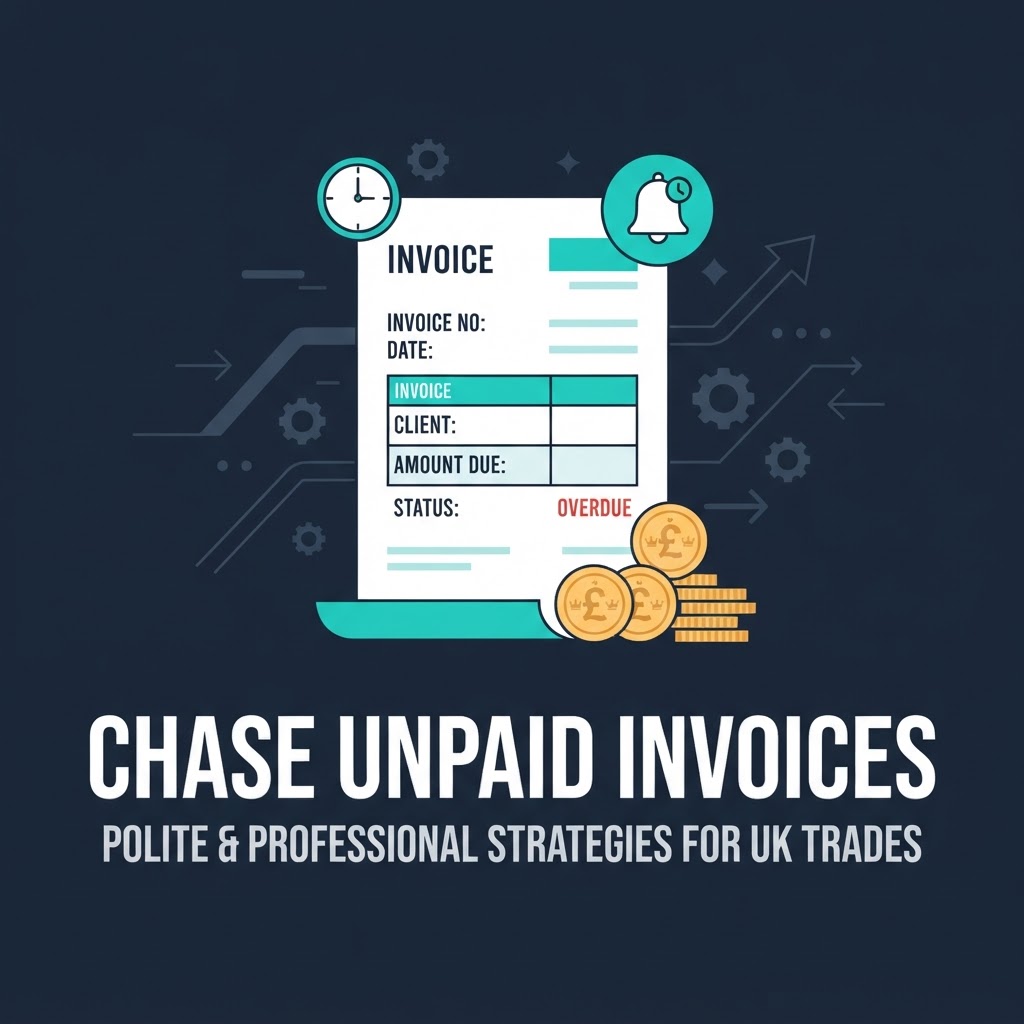
How to Chase Unpaid Invoices (Without Being Awkward)
You finished the job, sent the invoice and expected payment. Then the due date passed, and you are left wondering how to ask for your money without damaging the relationship.
Chasing an unpaid invoice is not awkward when you treat it as a normal part of running a business. You supplied the work or materials, the customer agreed to your terms, and a clear follow-up keeps the payment from being forgotten.
This guide explains how UK tradespeople, contractors and sole traders can chase overdue invoices professionally, including what to say, when to send reminders and what to do if a customer still does not pay.
Check the Invoice Before You Chase It
Before contacting the customer, check that the invoice is accurate and actually overdue. Confirm:
- The invoice was sent to the correct person and email address.
- The invoice number and customer details are correct.
- The payment due date has passed.
- Your bank account has not received the payment under a different reference.
- The customer did not raise a question or dispute that you missed.
- The payment instructions are clear and complete.
A missing purchase order number, incorrect bank detail or invoice sent to the wrong contact can delay payment unnecessarily. Fix obvious errors before sending a firm reminder.
When Should You Chase an Unpaid Invoice?
A sensible follow-up schedule is:
- A few days before the due date: send a friendly reminder if the customer is new or the invoice is significant.
- The day after the due date: send a polite overdue reminder.
- Seven days later: send a firmer follow-up with the invoice attached again.
- Seven to fourteen days after that: contact the customer directly and set a clear payment deadline.
- After the final deadline: consider formal recovery steps, interest or professional advice.
Your exact timing can depend on the customer, the value of the invoice and your agreed payment terms. Do not wait months before taking action. The longer an invoice remains unpaid, the harder it can be to resolve.
First Reminder: Keep It Friendly
Your first message should assume the delay is an oversight. Keep it short, include the invoice number and attach the invoice again so the customer does not have to search for it.
Subject: Friendly reminder: Invoice 1042 due for payment
Hi [Name],
I hope you are well. I am just following up on invoice 1042 for £[amount], which was due on [date]. I have attached a copy for convenience.
Could you please confirm when payment is expected? If you have already paid, please ignore this message and send me the payment reference so I can update my records.
Thanks, [Your name]
This wording is professional without being confrontational. It gives the customer an easy way to explain a genuine issue or confirm that payment has already been sent.
Second Reminder: Be Clearer About the Overdue Amount
If there is no response, make the position more direct. State the amount, the original due date and the new date by which you need payment.
Subject: Overdue invoice 1042: payment requested
Hi [Name],
Invoice 1042 for £[amount] remains unpaid. The original due date was [date].
Please arrange payment by [new date] using the bank details on the invoice. If there is a problem with the invoice or the work, please let me know by return so we can discuss it.
I would appreciate confirmation once payment has been made.
Regards, [Your name]
Avoid vague phrases such as "when you get a chance". They make the request sound optional. A clear payment date is easier for both sides to understand.
Call the Customer When Email Is Not Working
Some customers do not respond to email because they are busy, not because they are deliberately avoiding payment. A short phone call can resolve a missing detail quickly.
You could say:
Hi [Name], it is [your name]. I am calling about invoice 1042, which is now overdue. I wanted to check that you received it and ask when payment is likely to be made.
Stay calm and take notes. If the customer promises to pay on a particular date, send a brief email afterwards confirming what was agreed. That creates a useful written record without making the call feel hostile.
What If the Customer Disputes the Invoice?
A disputed invoice needs a different approach from a forgotten payment. Ask the customer to explain the specific issue rather than accepting a general statement that they are unhappy.
Check your quote, written scope, variations, messages and job records. If you made a genuine mistake, correct it promptly. If the invoice reflects agreed work, explain the calculation clearly and provide supporting information.
Where only part of the invoice is disputed, ask the customer to pay the undisputed amount while you resolve the rest. Keep communication factual and avoid admitting liability before you have checked the details.
Keep Records of Every Follow-Up
Save invoices, reminders, call notes, delivery confirmations and customer replies. Record:
- When each invoice was sent.
- When reminders were sent and how they were delivered.
- Any payment promises or disputes.
- The amount outstanding and any part-payments.
- Your agreed next step and deadline.
Invoice Hero helps you keep invoice numbers, payment status and customer details organised, so overdue invoices are easier to spot before they become a serious cash-flow problem.
Can You Charge Interest on a Late Payment?
UK businesses may have rights under the Late Payment of Commercial Debts (Interest) Act 1998 when charging another business, subject to the circumstances and contract terms. Statutory interest is generally 8% above the Bank of England base rate, and fixed compensation may also be available.
The rules are different for consumer customers, and your contract may contain its own late-payment provisions. Check the current official guidance or speak to a solicitor before adding interest or compensation to an invoice. Do not assume that a late fee is automatically enforceable in every situation.
If you intend to charge interest, make sure your terms explain this before the work begins. Adding an unexpected charge after the due date can create a further dispute.
A Final Notice Before Further Action
If repeated reminders have been ignored, send a final notice. State the total outstanding, the deadline and what you may do next. Do not threaten action you are not prepared to take.
Subject: Final notice: invoice 1042
Hi [Name],
Invoice 1042 for £[amount], dated [date], is still outstanding despite previous reminders.
Please pay the full balance by [date]. If payment is not received, or if you do not contact me to agree a resolution, I may begin formal recovery action without further notice.
If you believe there is an error, please explain the issue in writing before the deadline.
Regards, [Your name]
For larger debts, consider legal advice before starting a claim. A solicitor can explain the appropriate process, which may include a letter before action and a Money Claim Online claim. Keep evidence that supports the debt and the work completed.
How to Prevent Late Payments in the Future
The best time to reduce late payments is before you start the job:
- Agree your price, scope and payment terms in writing.
- Ask for a deposit or stage payments on larger projects.
- Put the due date and payment methods prominently on every invoice.
- Send invoices as soon as the work is complete.
- Check new customers' billing requirements before starting.
- Use sequential invoice numbers and track whether each invoice is paid.
- Stop extending credit to a customer who repeatedly ignores agreed terms.
- Consider credit checks or deposits for higher-risk commercial work.
Clear processes make payment reminders feel routine rather than personal.
Try Invoice Hero for Easier Payment Tracking
Invoice Hero gives UK tradespeople, contractors and sole traders a simple way to create professional invoices, save customer details and see which invoices are paid or overdue. When your records are organised, you can follow up promptly instead of discovering months later that money is missing.
Try Invoice Hero free at invoicehero.co.uk/register.
FAQ
How do I politely chase an unpaid invoice? Keep the message short, mention the invoice number and amount, attach the invoice again and ask when payment is expected. Assume the delay may be an oversight in your first reminder.
How long should I wait before chasing an invoice? You can send a friendly reminder shortly before or on the due date. If the invoice is overdue, follow up the next day rather than waiting several weeks.
Can I charge interest on an overdue invoice? You may be able to charge statutory interest on qualifying business-to-business debts, but rules vary. Check current UK guidance and your contract before adding interest, especially for consumer customers.
What should I do if a customer says they will not pay? Ask for the reason in writing, review your agreement and evidence, and try to resolve any genuine dispute. For an undisputed debt that remains unpaid, consider a formal letter before action and professional legal advice.
Should I keep working for a customer who has not paid? Consider pausing further work until the overdue balance is paid or a written payment arrangement is agreed. Check your contract and communicate the decision clearly.
This article provides general information for UK tradespeople and is not legal advice. Late-payment rights and recovery procedures can depend on the customer, contract and circumstances. Check current official guidance or speak to a qualified solicitor.