How to Track Business Expenses as a UK Sole Trader
Learn how to track business expenses as a UK sole trader, what costs you can claim, what records to keep and how to avoid common mistakes at Self Assessment time.
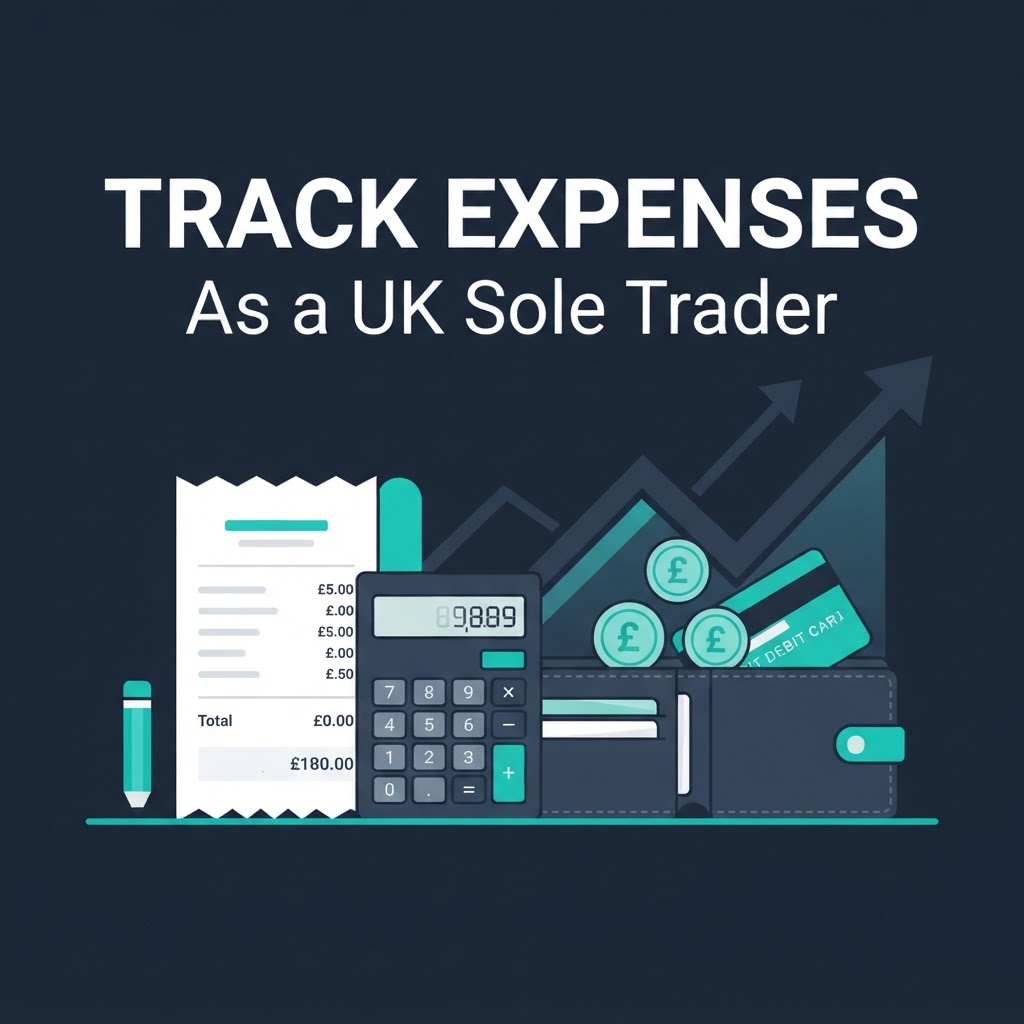
How to Track Business Expenses as a UK Sole Trader
If you're a sole trader, keeping track of expenses is one of the easiest ways to avoid paying more tax than necessary. But when you're busy doing jobs, travelling between sites and chasing payments, receipts can quickly end up in the van, a drawer or a photo folder you never check.
A simple system makes a big difference. This guide explains which expenses sole traders can usually claim, how to record them, what evidence to keep and how to organise everything before your Self Assessment tax return.
What Is a Business Expense?
A business expense is a cost you pay wholly and exclusively for running your business. Allowable expenses reduce your taxable profit, which can reduce the Income Tax and National Insurance you owe.
For example:
- Your turnover is £50,000.
- Your allowable business expenses are £10,000.
- Your taxable profit is £40,000.
You are generally taxed on profit, not turnover. That is why accurate expense records matter.
If something is partly business and partly personal, you can usually claim only the business proportion. If an expense is not genuinely connected to your work, do not claim it just because you have a receipt.
Common Allowable Expenses for UK Sole Traders
The exact expenses you can claim depend on your trade, but these are common for contractors, tradespeople and freelancers.
Tools and Equipment
You can usually claim tools and equipment bought for work, including replacements and repairs. Larger equipment may need to be claimed using capital allowances rather than as an ordinary day-to-day expense.
Keep the receipt and note what the item is used for. A £250 drill bought for installation work is easy to explain; a personal-use item is less straightforward.
Materials and Stock
Builders, electricians, plumbers and other trades can usually claim materials bought for jobs, such as cable, timber, fittings, fixings and paint. If you recharge materials to a customer, record both the purchase and the amount invoiced.
For CIS work, keep labour and materials clearly separated on your records and invoices where appropriate. CIS deductions generally apply to labour, not genuine materials costs.
Vehicle, Fuel and Travel
If you use a vehicle for work, you may be able to claim business mileage using HMRC's approved mileage rates, or claim an appropriate share of actual vehicle costs depending on your circumstances. Do not claim both methods for the same vehicle in the same period.
Keep a mileage log showing:
- Date of the journey
- Starting point and destination
- Business reason
- Miles travelled
- Vehicle used
You may also be able to claim business travel, parking and public transport. Ordinary journeys from home to a permanent workplace are usually treated differently from travel between temporary work sites, so get advice if your working pattern is complicated.
Insurance, Professional Fees and Subscriptions
Business insurance, accountancy fees, trade memberships, software subscriptions and professional advice can often be allowable where they relate to your business.
Examples include public liability insurance, bookkeeping software, a trade association membership and fees paid to an accountant for business tax work.
Phone and Internet
If you use your phone or broadband for work and personal reasons, claim only the business proportion unless a contract is used exclusively for business.
A sensible way to calculate this is to review your usage over a representative period and keep a note explaining how you arrived at the percentage.
Workwear and Protective Clothing
Protective clothing and branded uniform may be allowable where they are needed for your work. Ordinary everyday clothing is generally not allowable, even if you wear it while working.
Safety boots, a hard hat, high-visibility clothing and protective gloves are clearer examples than ordinary trousers or a jacket.
Training and Advertising
Training that updates or improves skills used in your existing business may be allowable. Advertising, website costs, printed leaflets and business cards can also qualify.
Training for an entirely new trade or qualification may be treated differently, so check with an accountant before assuming it is deductible.
How to Track Expenses in Practice
The best system is the one you will actually use every week. You do not need to wait until January to sort everything out.
1. Use a Separate Business Bank Account
A separate account makes it much easier to see what came into the business and what went out. It also gives you a clean record to compare against your invoices and receipts.
It does not have to be a complicated business banking package. The important thing is keeping business transactions separate from personal spending.
2. Capture Receipts Immediately
Take a clear photo of every receipt as soon as you buy something. Make sure the date, supplier, description and amount are readable.
Use a consistent file name or note, such as "2026-09-07-Screwfix-drill-250", and add a short description if the receipt itself is vague.
3. Categorise Expenses
Use categories that match the way you work, such as tools, materials, vehicle, insurance, phone, software, professional fees and training. Consistent categories make your records easier to review and your tax return easier to prepare.
4. Reconcile Once a Week
Set aside 15-20 minutes each week to match bank transactions with receipts and invoices. Fixing a missing receipt now is much easier than trying to remember it ten months later.
5. Review Monthly Totals
At the end of each month, check your income, expenses and profit. This helps you spot unusual costs, chase missing payments and set money aside for tax.
Invoice Hero can help you keep invoices and income organised, while your expense records can be exported or shared with your accountant as part of your wider bookkeeping system.
What Information Should an Expense Record Include?
For each expense, record:
- Date of purchase
- Supplier name
- What you bought
- Amount paid
- VAT amount, if relevant
- Business category
- Business reason
- Payment method
- Link to the receipt or invoice
- Business percentage if partly personal
A bank statement alone may prove that money left your account, but it may not explain what you bought or why it was for work. Keep the supporting receipt whenever possible.
Simplified Expenses: When Can You Use Them?
HMRC allows simplified expenses for some costs, including certain vehicle mileage, working from home and living at your business premises. Instead of calculating every actual cost, you use a flat rate.
Simplified expenses can save time, but they are not automatically best for everyone. Compare the flat-rate method with actual costs and choose a method that fits your circumstances. Keep your calculations and review the method if your business changes.
Common Expense-Tracking Mistakes
Mixing Personal and Business Spending
This makes records harder to understand and increases the risk of claiming something incorrectly. Use separate accounts and label any occasional personal transaction clearly.
Losing CIS Statements or Contractor Records
If you work as a CIS subcontractor, keep payment and deduction statements from every contractor. You need the total CIS deducted when completing your Self Assessment.
Claiming the Whole Cost of a Mixed-Use Item
If a phone, vehicle or internet connection is partly personal, claim only the reasonable business share.
Treating Turnover as Profit
Money received is not the same as profit. Set aside money for materials, running costs, tax and National Insurance before deciding what you can safely take home.
Waiting Until the Tax Deadline
A last-minute spreadsheet often contains missing receipts, duplicated expenses and forgotten mileage. Weekly records are more accurate and less stressful.
How Long Should You Keep Records?
Keep records of income and expenses for at least five years after the 31 January Self Assessment deadline for the relevant tax year. If HMRC sends you a notice to file later, the exact period can differ, so check current HMRC guidance.
Store digital copies securely and make sure you can find them if HMRC or your accountant asks for evidence.
A Simple Monthly Expense Checklist
- Download or review your business bank transactions.
- Photograph and attach any missing receipts.
- Categorise tools, materials, travel and other costs.
- Check mileage and work-related travel logs.
- Match payments to supplier receipts.
- Review income, expenses and estimated profit.
- Set aside money for tax and National Insurance.
- Export or back up your records.
How Invoice Hero Helps Sole Traders Stay Organised
Invoice Hero helps you keep your business income and customer records in one place. You can create professional invoices, track payment status, organise clients and keep a clear view of turnover throughout the tax year.
Pairing organised invoicing with a consistent expense-recording routine gives you cleaner figures for Self Assessment and makes it easier to share information with your accountant. Try Invoice Hero free at invoicehero.co.uk/register.
FAQ
What expenses can a sole trader claim in the UK? Common examples include business tools, materials, insurance, professional fees, software, advertising, business travel and the business proportion of phone or internet costs. The expense must be genuinely related to running your business.
Can I claim expenses without receipts? You should keep receipts and other supporting records. A bank statement may help, but it may not contain enough detail to prove what was bought and why it was for business.
Can I claim fuel as a sole trader? You may be able to claim business mileage using approved mileage rates or an appropriate share of actual vehicle costs. Keep a detailed mileage log and do not claim both methods for the same vehicle in the same way.
How do I track expenses if I work under CIS? Keep your contractor payment and deduction statements separately from your ordinary expense records. Record your business expenses as usual and include the CIS deducted when completing your Self Assessment.
Do I need accounting software to track expenses? Not necessarily, but software can make receipt storage, categorisation, bank matching and accountant handover easier. A spreadsheet can work if it is accurate, complete and kept up to date.
Can I claim for working from home? You may be able to claim actual additional household costs or use simplified expenses, depending on your circumstances. Check current HMRC guidance before choosing a method.
This article provides general information about UK sole-trader expenses. Tax rules and thresholds can change, and your circumstances may be different. Check current HMRC guidance or speak to a qualified accountant.