How to Invoice for Materials and Labour Separately (UK Guide)
Learn how UK tradespeople can itemise labour and materials on an invoice, explain markups clearly and avoid payment disputes. See how Invoice Hero makes it easier.
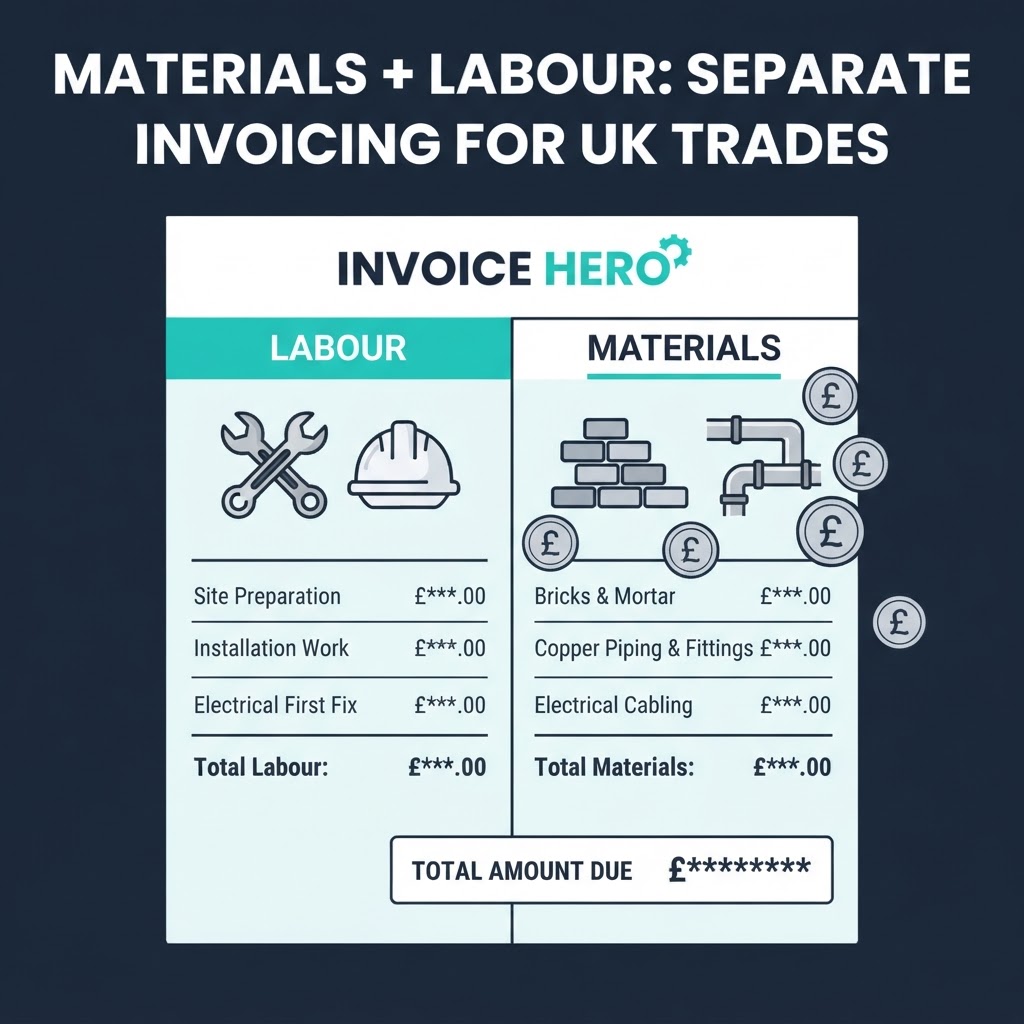
How to Invoice for Materials and Labour Separately (UK Guide)
When you finish a job, your invoice should make it easy for the customer to understand what they are paying for. Separating labour and materials is often the clearest approach for builders, plumbers, electricians and other UK tradespeople. It helps customers check the bill, gives you a better record of the job and can prevent avoidable questions delaying payment.
This guide explains what to include, how to show material costs and markups, and how to keep invoices consistent. It also covers the practical drawback of building every invoice manually, and how Invoice Hero can handle the repeat admin for you.
Why separate labour and materials?
An itemised invoice shows how the total is made up. Rather than one vague line such as "maintenance work, £850", the customer can see the work completed, the materials supplied and any other agreed charges.
A clear breakdown can:
- Make the bill easier for your customer to understand.
- Help identify a genuine error or question quickly.
- Connect the invoice to your quote, job notes and receipts.
- Give you a more useful record of income and costs.
- Make it easier to explain variations or additional work.
The right level of detail depends on the job. You do not need to list every screw individually, but significant materials and distinct work should be described accurately.
What to include on a UK trade invoice
Include the details relevant to your business and the transaction. Typically, a professional invoice should show:
- Your business name and contact details.
- The customer's name and address.
- A unique invoice number and invoice date.
- The job address, if different from the billing address.
- A clear description of work completed and the relevant dates or quote reference.
- Separate charges for labour, materials and agreed extras.
- The subtotal, any applicable VAT and total due.
- Payment terms, due date and payment instructions.
- VAT details required for your invoice, if you are VAT registered.
VAT invoice requirements vary by invoice type and circumstance. Check current HMRC guidance, and do not charge VAT if you are not registered to do so.
Example: labour and materials invoice
Here is a simplified example for a plumbing repair. Replace the descriptions, rates and amounts with the actual agreed work:
Description: Diagnose leak and replace kitchen tap, Quantity: 2 hours, Rate: £60.00, Amount: £120.00 Description: Replacement mixer tap, Quantity: 1, Rate: £85.00, Amount: £85.00 Description: Pipe fittings and seals, Quantity: 1 set, Rate: £18.00, Amount: £18.00 Description: Call-out charge, agreed in advance, Quantity: 1, Rate: £25.00, Amount: £25.00 Subtotal: £248.00 VAT, if applicable: [amount] Total due: [total]
The example separates time spent from the items supplied. It also identifies the call-out fee instead of hiding it inside another line. Only include charges that reflect the work and terms agreed with your customer.
How to describe labour clearly
Use descriptions a customer can connect to the job. "Labour" alone is not very informative. Instead, describe the main task and, where useful, the time or stage involved. For example:
- "Install two double sockets in kitchen, including testing, 2 hours."
- "Repair leaking joint beneath bathroom basin, 1.5 hours."
- "Prepare and fit replacement door frame, stage 2 of quote B-104."
Keep the description accurate and proportionate. There is no need to overload the invoice with technical notes, but the customer should be able to recognise the work. Refer to the quote or job number when that helps connect the invoice to the agreed scope.
Showing materials and any markup
List substantial materials separately, using a clear description and quantity where practical. For small consumables, grouping them into an accurately named line such as "fixings and sealants" may be reasonable, provided it reflects what was supplied and your agreement with the customer.
If your pricing includes a handling charge or margin on materials, set out your pricing approach clearly in your quote or terms before work begins. You do not generally need to disclose your wholesale purchase price, but the amount charged should be consistent with what the customer agreed. Avoid presenting a marked-up selling price as though it were your cost price.
Keep supplier receipts and job records for your own bookkeeping. The invoice is the customer-facing record of the agreed price, while receipts support your business records.
What about VAT?
If you are VAT registered, apply VAT according to the rules that apply to the supply and show the required VAT information on the invoice. Whether a particular charge is standard-rated, reduced-rated or treated differently can depend on the work and circumstances, so do not assume every material or labour item has the same treatment without checking.
If you are not VAT registered, do not add VAT or describe your invoice as a VAT invoice. Check HMRC guidance or ask an accountant if you are unsure about your obligations.
Common mistakes to avoid
- Using a vague description: "Building work" leaves the customer guessing. Name the main work and relevant stage.
- Combining unlike charges: Separate labour, substantial materials and agreed fees so the total is understandable.
- Adding unagreed extras: Get approval for variations and keep a written record before charging for them.
- Forgetting the job address: Include it when the billing address is different or the customer has several properties.
- Getting the maths or VAT wrong: Check calculations and tax treatment before sending.
- Losing track of payment: Record whether the invoice is sent, due, paid or overdue, then follow up consistently.
The hidden cost of doing every invoice manually
A document template can show the customer a breakdown, but it cannot maintain your invoice sequence, remember customer details, calculate every total safely, or show you which jobs remain unpaid. Copying an old invoice can also carry over the wrong address, date or line item. Those little admin slips create queries, rework and delayed payments.
Invoice Hero helps tradespeople create consistent invoices with saved customer details, clear line items and calculated totals. You can keep invoice and payment status together, so it is easier to spot what needs attention instead of searching folders and bank statements. For a builder, plumber or electrician, that means less time formatting paperwork after the job and a clearer view of the money coming in.
A simple invoicing routine
- Agree the scope, price, payment terms and how variations will be approved before work starts.
- Record materials supplied and the work completed as you go.
- Check the invoice against your quote and job notes.
- Separate labour, materials and other agreed charges clearly.
- Verify the customer details, totals, VAT treatment and due date.
- Send the invoice promptly and record its payment status.
- Follow up overdue invoices politely and keep a record of the exchange.
Using Invoice Hero makes this routine repeatable: save customer details, add clear items, send the invoice and keep its status visible. Try Invoice Hero free at invoicehero.co.uk/register.
Frequently asked questions
Do I have to show labour and materials separately? There may not be one universal format for every job, but an understandable breakdown is good practice and may be required by your contract or customer. Check any agreed invoicing requirements and applicable tax rules.
Should I show my cost price for materials? You should invoice according to the pricing agreed with the customer. You do not normally need to disclose your supplier cost, but describe what you supplied accurately and be clear about any handling or pricing approach agreed in advance.
Can I charge a markup on materials? Your charge should follow the quote, contract or pricing terms agreed with your customer. Explain your approach before the work begins, and do not misrepresent a selling price as your purchase cost.
Should I include receipts with the invoice? You can provide receipts if the customer or contract requires them, or if they help explain an agreed charge. Keep copies for your own records regardless.
How do I reduce disputes about extra materials or work? Explain the change, price and impact on the job, then get the customer's approval in writing before proceeding where practical. Reference the approved variation on the invoice.
How can I track which invoices have been paid? A spreadsheet or organised records can work for a small number of jobs, but it requires manual updates. Invoice Hero keeps invoices and their payment status together, making due and overdue bills easier to review.
This article is general information for UK tradespeople and is not tax, legal or accounting advice. VAT treatment and invoice requirements depend on your circumstances and the work. Check current HMRC guidance or speak to a qualified adviser.